
Emergency Water Extraction & Drying in Orem, UT
Water is on the floor and still spreading. Tell us once what happened, and independent restoration companies serving Orem and Utah Valley can contact you directly with free quotes. Many of them typically offer 24/7 emergency response.
Get a Free Quote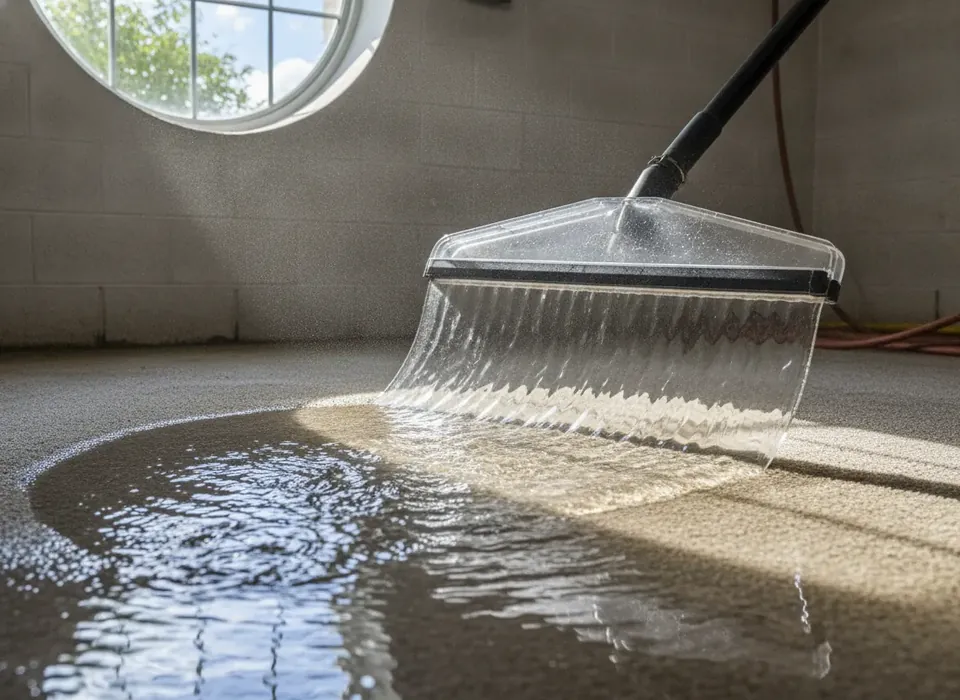
What happens first
The first hour is about three things: stop the water, stay safe, and get the bulk of it off the floor before carpet pad and drywall soak it up.
- Close the main shutoff. In many Utah Valley homes it sits in the basement where the line comes through the foundation wall; in others it is at the meter box near the street. Homes vary, so check yours.
- Switch off breakers for wet rooms, but only if you can reach the panel without standing in water.
- Photograph and video every wet surface before anything is moved or thrown out.
- Lift rugs, cords and boxes off the floor, and put foil or blocks under furniture legs.
Then send the form below or call (385) 346-0996. Orem Water Damage Pros is a free referral service, not a contractor. The companies that reply are independent, and you decide whether to hire any of them.
What restoration companies typically do on an extraction call
Every company works a little differently. Ask the one you choose for a written scope before work starts.
Check hazards and the source
The technician confirms the water is off, looks for live circuits and decides whether the water is clean, gray or black. That category sets the safety gear, what can be saved and the price per square foot.
Pull out standing water
Truck-mounted or portable extractors lift water from carpet, pad and hard floors. Weighted extraction tools press water out of carpet that might be saved, which shortens drying time.
Map the moisture
Moisture meters and often a thermal camera trace water into walls, under cabinets and across to the next room. Readings are logged so drying can be measured against them.
Remove what won't dry
Soaked carpet pad, swollen baseboards and the wet bottom of drywall usually come out. In Utah that tear-out is construction trade work, so it belongs with a DOPL-licensed contractor.
Set up drying and monitor
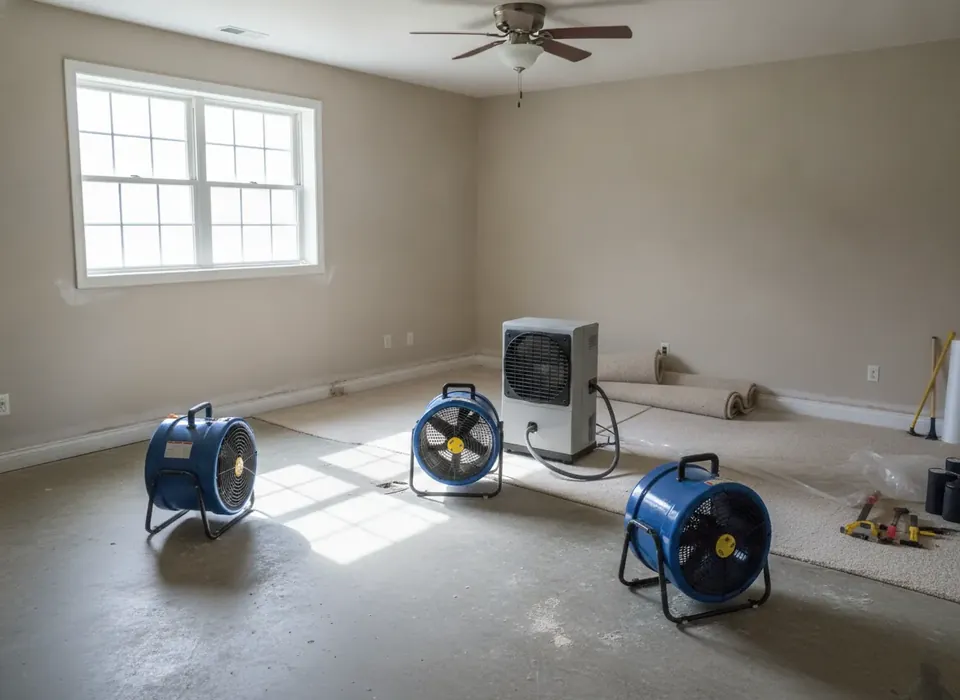
Air movers and dehumidifiers are placed from the readings, then checked daily until materials reach normal moisture levels. Drying is finished when the meter says so, not when the surface feels dry.
Structural drying and dehumidification
Extraction removes the water you can see. Structural drying removes the water inside studs, subfloor, drywall and the concrete slab. Air movers push air across wet surfaces, and dehumidifiers pull that moisture out of the room so it doesn't settle back in.
Utah Valley air is dry most of the year, which helps. A basement is a different story: concrete walls and floors give up water slowly and stay cool, so drying below grade usually takes longer than upstairs. Expect equipment to run for several days and expect daily moisture readings. Keep the windows shut unless the technician asks otherwise, and don't switch equipment off overnight to save noise.
Extraction in Utah Valley homes: what's different here
Most emergencies in Orem end up downstairs. Local realtors note that most Utah Valley homes have basements, many of them finished, and water from any floor runs down to them. Finished basements mean carpet over pad, drywall to the floor and wood-framed walls against concrete, all of which hold water.
Winter is the busy season for pipe breaks. At the Provo BYU weather station, the average January low is 23.5°F and the average coldest night of January reaches 8.4°F (NOAA normals). A frozen pipe in an exterior wall can flood a basement ceiling before anyone notices. Summer brings cloudbursts: in the August 2024 storm, the Daily Herald reported that some northeast Orem homes built below road grade took 2–3 feet of water.
Housing age matters too. Census data puts Orem's median year built at 1989, with 37% of homes built before 1980. In older homes, ask whether an asbestos test is needed before wet drywall or textured ceilings come out (Utah DAQ rule R307-801). Owners of homes with four units or fewer are generally exempt from the inspection rule, but rentals and larger condo buildings may not be.
What emergency extraction and drying typically cost
Extraction is usually priced per square foot by water category, and the full job grows with how many materials got wet.
| Item | Typical range | Source |
|---|---|---|
| Extraction per sq ft (clean / gray / black water) | $3.75–$4.25 / $4.10–$6.50 / $7–$7.50 | Fixr |
| Class of loss | Class 1 $150–$400 · Class 2 $500–$1,000 · Class 3 $1,000–$3,000 · Class 4 $20,000+ | Fixr |
| Emergency / after-hours fee | $50–$200 | Fixr |
| Whole job, typical | $1,200–$5,000 (Fixr avg ≈ $3,000; Angi avg $3,868, most pay $1,383–$6,369) | Fixr Jan 2025; Angi 2026 |
Insurers and restoration companies price jobs line by line in estimating software, so treat these as planning figures. Rough out your own numbers with the calculator on the Orem water damage cost guide. Repairing the pipe or appliance that failed is billed separately by a licensed plumber.
Insurance and paperwork
Standard homeowners policies usually cover water that escapes suddenly and accidentally, such as a burst supply line or a failed washer hose. They usually exclude slow leaks, flood (rising surface water) and groundwater seepage. Check your policy, and expect your policy's deductible to apply.
Under Utah Admin. Code R590-190, your insurer generally must acknowledge the claim within 15 days, and accept or deny it within 30 days of a complete proof of loss (or explain in writing why it needs more time). Emergency extraction is mitigation, so keep invoices and the daily drying logs. If a company hands you an assignment of benefits, read it first: Utah law requires specific written warnings, a scope and a price in it. Questions about coverage go to your adjuster or a Utah attorney.
When it's an emergency
- Water is still running and the shutoff won't close it.
- Water is near outlets, the furnace, the water heater or the electrical panel.
- Carpet in more than one room is wet, or water has reached a finished basement.
- The water came from a drain, toilet or outside, so it may be contaminated.
- The ceiling below the leak is sagging or dripping.
The full sequence, from moisture mapping to rebuild, is on the restoration process page.
Emergency extraction FAQ
How fast can someone get to my Orem home?
That depends on the company, the hour and the weather. Many Utah Valley providers typically offer 24/7 emergency response, but we can't promise an arrival time, and after a big storm every crew is stretched. While you wait, keep the water shut off, wet-vac what you can and get belongings off the floor.
Can I dry it out myself with fans?
A small clean-water spill on a hard floor, caught right away, often dries fine with fans and a wet-vac. Once water reaches carpet pad, drywall or a basement wall, fans usually dry the surface and leave the inside wet. A moisture meter reading is the only reliable test, and hidden moisture is what turns into mold.
How long does drying take?
Many rooms dry in about three to five days once equipment is set up, but basements with concrete floors, thick carpet or wet wall cavities often take longer. The company should take readings every day and leave equipment in place until materials reach normal levels. See the blog post on how long a flooded basement takes to dry.
Do restoration companies need a Utah license?
Tear-out and rebuild count as construction trade work in Utah, so look for a contractor licensed by DOPL. Search the company name or license number at dopl.utah.gov, and ask for the number; licensees must give it on request. Many restoration companies also hold IICRC training, so ask which certifications the crew has.
Should I keep wet carpet?
Carpet soaked by clean water and extracted quickly can often be dried in place, though the pad underneath is usually replaced. Carpet touched by sewage or outside floodwater is normally thrown out. Photograph it and keep a small sample until your adjuster has seen it.
Get free extraction quotes in Orem
Say what is wet, how it started and whether the water is off. Independent Utah Valley companies reply to you directly, with no obligation.
Water where it shouldn't be? Get free quotes.
Tell us what happened and independent Utah Valley restoration companies can reply with no-obligation quotes.