
How to Keep Pipes From Freezing in a Utah Winter
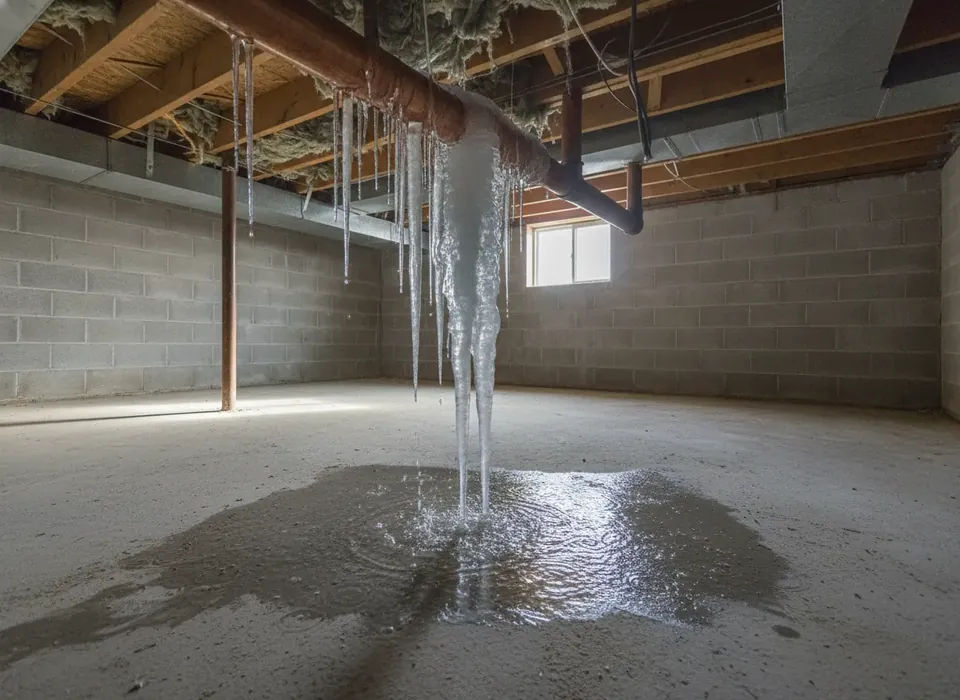
Utah Valley winters are cold enough to freeze pipes most years. At the Provo BYU weather station, the average January low is 23.5°F, and the average coldest night of January is 8.4°F, based on NOAA's 1991–2020 normals. The record low there is −20°F. Pipes in the wrong spot freeze on nights like that, and the damage usually shows up when the ice thaws and a split line starts pouring water into a basement ceiling.
The good news is that most frozen pipes are preventable with a few fall chores and some habits on the coldest nights. Here's what works in Orem and the rest of Utah County.
Where pipes freeze in Utah homes
Pipes freeze where they're exposed to outside air and cut off from the home's heat. The usual suspects:
- Hose bibs (outdoor spigots), especially with a hose still attached.
- Exterior walls, particularly kitchen and bathroom sinks on an outside wall, and lines in the rim joist area of a basement ceiling.
- Garages, where laundry hookups, water softeners or lines to a bathroom above sit in unheated space.
- Crawl spaces and unfinished storage rooms with foundation vents.
- Sprinkler backflow preventers and the piping between the house and the sprinkler valves.
Do these before the first hard freeze
- Disconnect every garden hose and drain it.
- Shut off and drain the sprinkler system, including the backflow preventer.
- Find your main water shut-off and make sure it turns.
- Insulate exposed pipes in the garage, crawl space and basement rim joists.
- Seal drafts where pipes pass through exterior walls.
Outdoor faucets and hoses
Disconnect hoses in October. A hose left on a spigot traps water in the faucet, and even a frost-free hose bib can split inside the wall when that trapped water freezes. Frost-free bibs only work if they can drain.
If you have an older, non-frost-free spigot, look in the basement for a shut-off valve on the line that feeds it. Close that valve, then open the outdoor faucet to let it drain, and leave it open for the winter. Insulated foam covers over the faucet help on cold nights but aren't a replacement for draining it.
Sprinklers and secondary water
Sprinkler systems are one of the most common sources of freeze damage in Utah County, and how you winterize depends on where you live.
- Orem doesn't have a secondary water system; sprinklers there run off culinary (drinking) water. Shut the valve that feeds the sprinkler system, drain or blow out the lines, and drain the backflow preventer. A cracked backflow device or valve can flood a yard or seep into a basement next spring.
- Cities with pressurized irrigation (PI), such as Lindon and Saratoga Springs, drain their systems around mid-October. Lindon asks residents to close their PI valves, around mid-November, to prevent spring flooding. Saratoga Springs asks residents to close the ball valve after November 1 and says every system must be completely drained.
In PI cities, the homeowner is generally responsible for leaks past the stop-and-waste valve or the meter. Never connect secondary water to your culinary plumbing. More on this on the sprinkler and secondary water leaks page.
Insulate and seal the weak spots
Foam pipe insulation from a hardware store is cheap and works well on exposed lines in garages, crawl spaces and unfinished basements. Pay attention to basement ceilings where pipes run close to the rim joist; cold air often leaks in there around the sill plate. Seal gaps with foam or caulk, and put insulation between the pipe and the cold wall, not between the pipe and the warm room.
Heat cable (heat tape) can help on pipes that can't be moved or insulated well. Use a product listed for pipes, follow the manufacturer's instructions exactly, and don't wrap it over itself.
On the coldest nights
When the forecast drops toward single digits, a few habits make a big difference:
- Keep the heat on. Don't set the thermostat far down overnight during a cold snap.
- Open cabinet doors under sinks on exterior walls so warm air reaches the pipes.
- Let a faucet drip on a line that has frozen before. Moving water is less likely to freeze, and an open faucet relieves pressure if ice forms.
- Keep the garage door closed, especially if the water heater, softener or laundry lines are in there.
- Don't block heat to basement storage rooms where the main line enters.
Frozen-pipe calls can come in waves on the Wasatch Front. Sandy City reportedly answered about 40 frozen-pipe calls in a single day during one cold spell, according to local TV coverage.
Leaving for the holidays
An empty house is where a frozen pipe does the most damage, because nobody notices it for days. Before you travel in winter:
- Leave the heat on. Many people use 55°F as a floor.
- Consider shutting off the main water valve and opening a faucet on the lowest floor to drain the pressure. If you have a boiler or fire sprinklers, ask a plumber first.
- Ask someone to check the house, especially if a cold snap is forecast.
- A smart leak sensor or a thermostat that sends alerts is a small cost compared to a flooded basement.
Insurance matters here too. Many homeowners policies expect you to maintain heat or shut off and drain the water while the home is unoccupied, and a frozen-pipe claim can be denied if you didn't. Check your policy before you leave. See does homeowners insurance cover a flooded basement in Utah.
What to do if a pipe freezes
No water from a faucet, or just a trickle, on a very cold morning usually means a frozen line. Act before it thaws on its own:
Shut the main
If the pipe has split, closing the main now means less water when it thaws.
Open the faucet
Leave the affected faucet open so melting ice and water have somewhere to go.
Warm it gently
Use a hair dryer, a space heater kept well clear of anything that can burn, or warm towels. Start at the faucet end and work back. Never use an open flame or a torch.
Call a plumber
If you can't find or reach the frozen section, or you see a crack, call a licensed plumber.
If a pipe has already burst
Shut the main, cut power to wet areas if you can reach the panel safely, and photograph everything. Call a licensed plumber to repair the pipe, since plumbing work in Utah must be done by a licensed plumber. Then get the water out quickly. Water from a burst line in a basement ceiling soaks drywall, insulation and carpet, and it needs to be dried within a day or two to limit mold.
The burst and frozen pipe cleanup page explains what restoration companies do and how they split the work with the plumber. Typical costs are in the water damage restoration cost guide. Orem Water Damage Pros connects you with independent Utah Valley restoration companies, which typically offer 24/7 emergency response. Request free quotes or call (385) 346-0996.
Frequently asked questions
At what temperature do pipes freeze in Utah?
Pipes in exposed spots can start to freeze when outdoor temperatures drop into the low 20s or below for several hours, and the risk rises sharply in single digits. At the Provo BYU station, the average January low is 23.5°F and the average coldest night is 8.4°F, so most Utah Valley winters bring freeze-risk nights.
Should I drip my faucets in Utah?
On the coldest nights, letting a faucet drip on a line that runs along an exterior wall or has frozen before is a cheap precaution. Moving water is less likely to freeze, and an open faucet relieves pressure if ice does form. Opening the cabinet doors under that sink helps too.
How do I winterize my outdoor faucet in Utah?
Disconnect and drain the hose, because a hose left attached can split even a frost-free bib. For older spigots, close the shut-off valve on that line inside the house, then open the outdoor faucet to drain it and leave it open for winter. An insulated cover adds protection.
Does insurance cover frozen pipes?
Often the resulting water damage is covered as a sudden and accidental discharge, but many policies require that you kept the heat on or shut off and drained the water while the home was unoccupied. The cracked pipe itself may not be covered. Check your policy and ask your adjuster.